

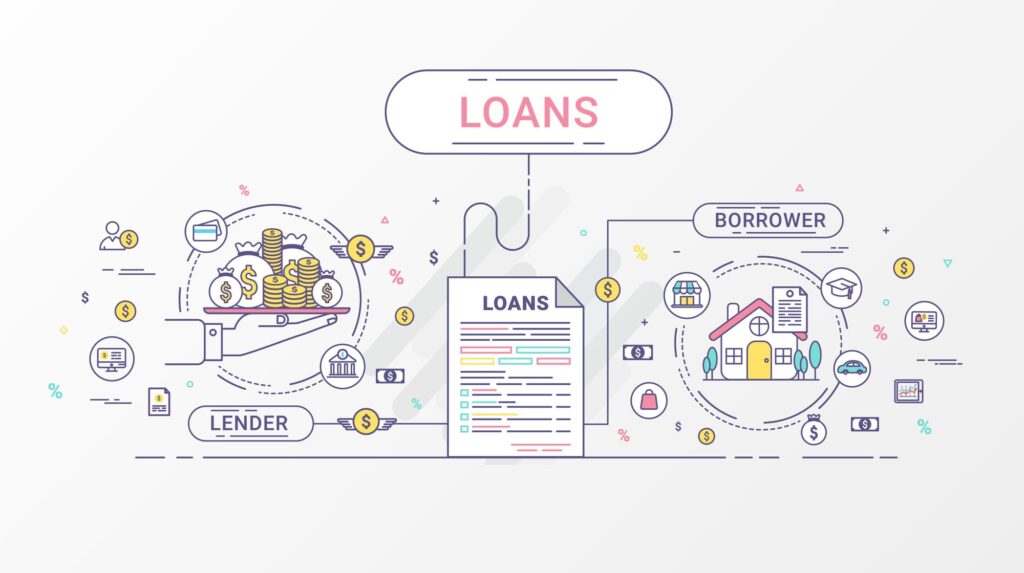
Loans serve as financial instruments that cater to various needs, from personal expenses to business expansions. In India, there is a wide array of loan types designed to address specific requirements. This guide aims to provide an overview of different loan options available, their unique features, benefits, and considerations for choosing the right loan.
Target Audience:
This blog targets individuals and businesses in India seeking comprehensive knowledge about different loan types available, including potential borrowers, financial advisors, and anyone interested in understanding the loan landscape.
Content Quality:
This guide offers in-depth, well-researched information on the various loan types in India, ensuring clarity and providing actionable insights for readers.
Different Types of Loans Available in India
1. Personal Loans
Personal loans are unsecured loans provided by banks and NBFCs for various personal expenses.
- Features:
- Unsecured: No collateral required.
- Flexible Use: Can be used for any personal need.
- Quick Disbursal: Fast approval and disbursal process.
- Benefits:
- Immediate Funds: Access to funds for emergencies or planned expenses.
- Flexible Tenure: Repayment terms typically range from 1 to 5 years.
- Minimal Documentation: Requires basic documents like identity and income proof.
2. Home Loans
Home loans are secured loans designed for purchasing or constructing residential properties.
- Features:
- Secured Loan: Property acts as collateral.
- Long Tenure: Repayment terms can extend up to 30 years.
- Tax Benefits: Eligible for tax deductions under Section 80C and 24(b) of the Income Tax Act.
- Benefits:
- Affordable EMIs: Lower interest rates compared to unsecured loans.
- High Loan Amount: Covers a significant portion of the property cost.
- Ownership: Facilitates property ownership with structured repayment options.
3. Car Loans
Car loans provide financing for purchasing new or used vehicles.
- Features:
- Secured Loan: Vehicle serves as collateral.
- Fixed Interest Rates: Interest rates are usually fixed for the loan tenure.
- Short to Medium Tenure: Repayment terms typically range from 1 to 7 years.
- Benefits:
- Immediate Ownership: Own the vehicle with affordable monthly installments.
- Flexible Repayment Options: Various tenure options to suit financial capabilities.
- Special Offers: Many lenders offer promotions and discounts with car manufacturers.
4. Education Loans
Education loans fund higher education expenses for students in India and abroad.
- Features:
- Secured or Unsecured: Can be either, depending on the loan amount.
- Moratorium Period: Grace period for repayment after course completion.
- Tax Benefits: Interest paid on education loans is eligible for deduction under Section 80E of the Income Tax Act.
- Benefits:
- Access to Quality Education: Covers tuition fees, accommodation, and other related expenses.
- Flexible Repayment: Repayment starts after course completion, considering the student’s employment status.
- Competitive Interest Rates: Generally lower compared to personal loans due to the purpose-driven nature.
5. Business Loans
Business loans cater to entrepreneurs and businesses for various financial needs.
- Features:
- Secured or Unsecured: Based on loan amount and terms.
- Purpose-Specific: Working capital, equipment purchase, expansion, etc.
- Flexible Tenure: Repayment terms vary based on the loan purpose and lender policies.
- Benefits:
- Capital Infusion: Funds for business growth and operational expenses.
- Customized Solutions: Tailored loan products for specific business requirements.
- Boosts Cash Flow: Helps manage liquidity and cash flow fluctuations.
6. Private Finance Loans
Private finance loans are typically provided by private lenders or individuals and can be used for personal or business needs.
- Features:
- Flexible Terms: Terms negotiated directly with the lender.
- Quick Processing: Faster approval compared to traditional banks.
- Higher Interest Rates: Generally higher interest rates due to higher risk.
- Benefits:
- Accessibility: Easier approval for individuals with complex financial situations.
- Customized Solutions: Tailored terms based on borrower’s needs and repayment capabilities.
7. Corporate Finance
Corporate finance involves loans tailored for corporations and large enterprises to fund operations, expansions, mergers, and acquisitions.
- Features:
- Large Loan Amounts: Significant funds for corporate needs.
- Complex Structures: Structured to meet specific corporate financial goals.
- Syndicated Loans: Coordinated by multiple lenders for large-scale financing.
- Benefits:
- Strategic Growth: Facilitates corporate growth through strategic investments.
- Risk Management: Diversified funding sources and risk mitigation strategies.
8. Project Finance
Project finance is structured to finance specific projects, typically in infrastructure, energy, or real estate sectors.
- Features:
- Asset-Based Financing: Project assets serve as collateral.
- Long-Term Financing: Matches project lifecycle with repayment terms.
- Specialized Expertise: Requires assessment of project viability and risks.
- Benefits:
- Limited Recourse: Limits financial risk to project assets, not the entire company.
- Optimized Capital Structure: Balances debt and equity for project sustainability.
- Enhanced Financial Flexibility: Tailored financial structures to fit project requirements.
9. Mortgage Loans
Mortgage loans use real estate property as collateral for financing purposes.
- Features:
- Secured Loan: Property serves as collateral.
- Large Loan Amounts: Based on property valuation.
- Long Tenure: Repayment terms can extend up to 15-20 years.
- Benefits:
- Low Interest Rates: Lower rates compared to unsecured loans.
- Leverage Asset Value: Access funds based on property valuation.
- Flexible Use: Funds can be used for personal or business needs.
10. Machinery Loans
Machinery loans finance the purchase of industrial machinery and equipment for manufacturing units and businesses.
- Features:
- Asset-Based Financing: Machinery serves as collateral.
- Specific Purpose: Used solely for purchasing machinery.
- Tailored Tenure: Repayment terms aligned with machinery lifespan and depreciation.
- Benefits:
- Enhanced Productivity: Upgraded machinery improves operational efficiency.
- Cost Management: Spread equipment costs over loan tenure.
- Tax Benefits: Depreciation benefits can be claimed on machinery.
11. Balance Transfer Loans
Balance transfer loans allow borrowers to transfer existing loan balances to another lender for better terms or lower interest rates.
- Features:
- Debt Consolidation: Consolidates multiple loans into one for easier management.
- Lower Interest Rates: Transfer to avail lower rates and save on interest costs.
- Flexible Terms: New lender offers better repayment terms or tenure.
- Benefits:
- Cost Savings: Reduce overall interest costs with lower rates.
- Simplified Repayment: Manage loans more effectively with consolidated payments.
- Improved Credit Score: Timely repayments can enhance creditworthiness.
12. Debt Consolidation Loans
Debt consolidation loans combine multiple debts into a single loan with a lower overall interest rate.
- Features:
- Single Payment: Simplifies debt management with one monthly payment.
- Lower Interest Rates: Reduces interest costs compared to multiple debts.
- Extended Tenure: Extends repayment period to lower monthly payments.
- Benefits:
- Financial Discipline: Helps regain control over finances with structured repayment.
- Lower Stress: Reduces financial burden and stress of managing multiple debts.
- Improved Credit Score: Consistent payments can boost credit rating over time.
13. Loan Against Property (LAP)
Loan against property allows borrowers to pledge their residential or commercial property as collateral for a loan.
- Features:
- Secured Loan: Property serves as collateral.
- High Loan Amounts: Based on property value and repayment capacity.
- Long Tenure: Repayment terms can extend up to 15-20 years.
- Benefits:
- Lower Interest Rates: Lower than unsecured loans due to collateral security.
- Flexible Use: Funds can be used for personal or business purposes.
- Leverage Property Value: Unlock liquidity without selling property.
14. Overdraft (OD) and Cash Credit (CC)
OD and CC are revolving credit facilities offered by banks to individuals and businesses based on their creditworthiness.
- Features:
- Revolving Credit: Allows withdrawals up to a pre-approved limit.
- Flexible Repayment: Interest charged only on the utilized amount.
- Short-Term Financing: Suitable for working capital needs and temporary cash flow gaps.
- Benefits:
- Financial Flexibility: Access funds as needed within the approved limit
15. MSME (Micro, Small & Medium Enterprises) Loans
MSME loans are designed to support small and medium-sized enterprises in India for various business needs.
- Features:
- Targeted Financing: Tailored loans for MSME sector requirements.
- Government Schemes: Accessible under various government initiatives.
- Collateral-Free Options: Available under CGTMSE (Credit Guarantee Fund Trust for Micro and Small Enterprises) for collateral-free loans.
- Benefits:
- Business Growth: Funds for expansion, technology adoption, and infrastructure development.
- Competitive Interest Rates: Subsidized rates under government schemes.
- Job Creation: Promotes entrepreneurship and employment generation.
16. SME (Small & Medium Enterprises) Loans
SME loans cater to medium-sized enterprises requiring financial support for growth and operational needs.
- Features:
- Customized Financing: Structured loans based on business size and requirements.
- Sector-Specific Solutions: Industry-specific loan products.
- Flexible Repayment: Tailored to match business cash flows and revenue cycles.
- Benefits:
- Capital Infusion: Funds for working capital, expansion, and technology upgrades.
- Risk Management: Mitigates financial risks with structured financing.
- Government Support: Access to subsidized loans under various schemes.
How to Choose the Right Loan for Your Needs
Choosing the right loan involves assessing your financial situation, understanding the purpose of the loan, and comparing different loan products.
- Assess Your Needs: Determine the exact purpose and amount needed.
- Check Eligibility: Ensure you meet the eligibility criteria for the loan type.
- Compare Interest Rates: Look for competitive interest rates and favorable terms.
- Read the Fine Print: Understand all terms and conditions, including fees and charges.
Understanding the different types of loans available in India can help you make informed financial decisions. Whether you need funds for personal use, buying a home or car, or expanding your business, there is a loan product designed to meet your needs. By knowing their features and benefits, you can choose the right loan that aligns with your financial goals.
For more insights into personal finance and loan options, subscribe to our newsletter. If you have any questions or need assistance with choosing the right loan, feel free to contact us or leave a comment below.